Carnot Energies du futur

Our teams are mobilized so that, with our industrial partners, we can provide efficient and competitive technological solutions that will contribute to Europe’s ambition to achieve carbon neutrality by 2050. Research activities of Carnot Energies du Futur cover the whole value.
Key figures
Fermer
Key figures
| Permanent staff (full-time equivalent) | 1 000 |
| PhD Students | 500 |
| Global budget | 170 M€ |
| Partnership incomes with industry | 40 M€ |
Contact
Fermer
Contact
Institut Carnot Energies du Futur
Bâtiment GreEn-ER
21 avenue des martyrs - CS 90624
38031 Grenoble CEDEX 1
Nathalie COLOMBEL
+(33) 6 78 52 89 42
Eloïse HUISSOUD-GERMAIN
+(33) 4 76 57 45 31
nathalie.colombel[a]cea.fr Email contact
eloise.huissoud-germain[a]grenoble-inp.fr
Parent institutions
Fermer
Parent institutions
Design the future of energy, from materials to systems, more efficiency, less carbon impact on the planet
Research for the future of energy:
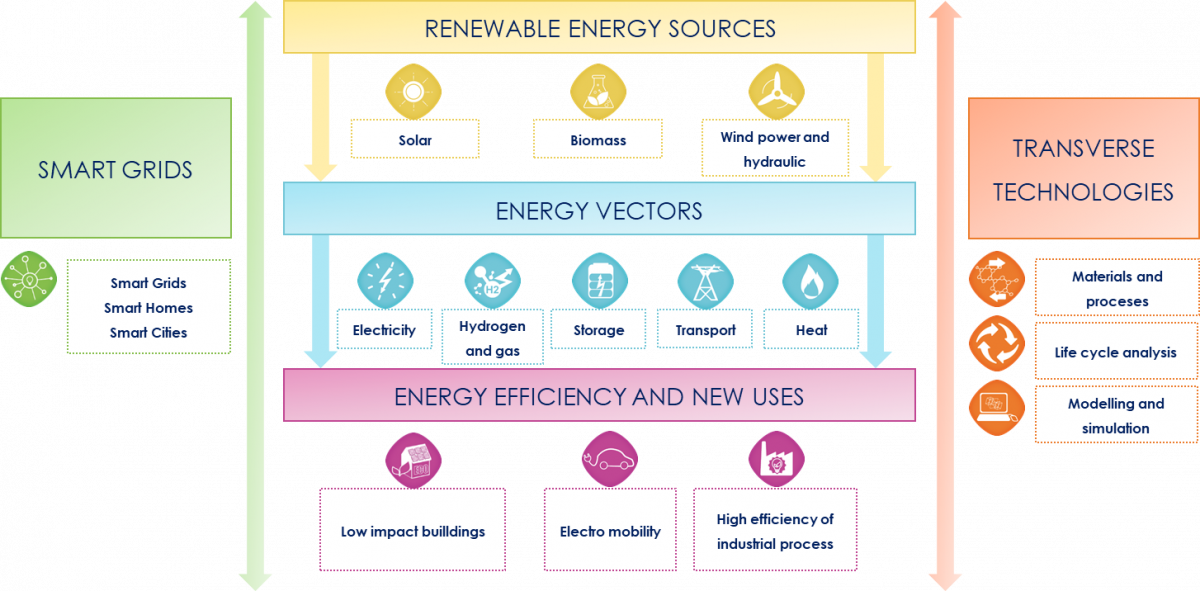
The Carnot institute ““Energies du futur” research activities are distributed over five main topics:
- Low-carbon energy production (solar photovoltaic and thermal systems, bio-resources, hydraulic power…)
- Storage, conversion and energy vectors (various energy vectors)
- Smart grids
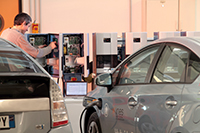
- High efficiency new uses (low-impact building, mobility, industry)
- Transversal technologies (modelling and simulation, life cycle analysis, materials and energy management and economy)
Economic sectors:
- Industry
- Building
- Consumption
Addressed markets :
- Low-carbon impact energies
- Energy efficiency
- New uses of energy :
- Grids
- Transport
- Building
- Industry

Major equipment and platforms for energy
|
|
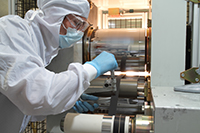
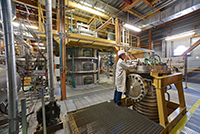
The Carnot institute “Energies du futur” offers a wide range of technological platforms with key benefits:
- To develop technologies from proof-of-concept to prototypes in order to push forward innovation and access to the market
- To develop, to measure and characterize innovative solutions, thanks to cutting-edge equipment
- To imagine new solutions and test technologies before transferring them into the market